No. 01 · LaSalle
Where Zen Buddhism arrived in America
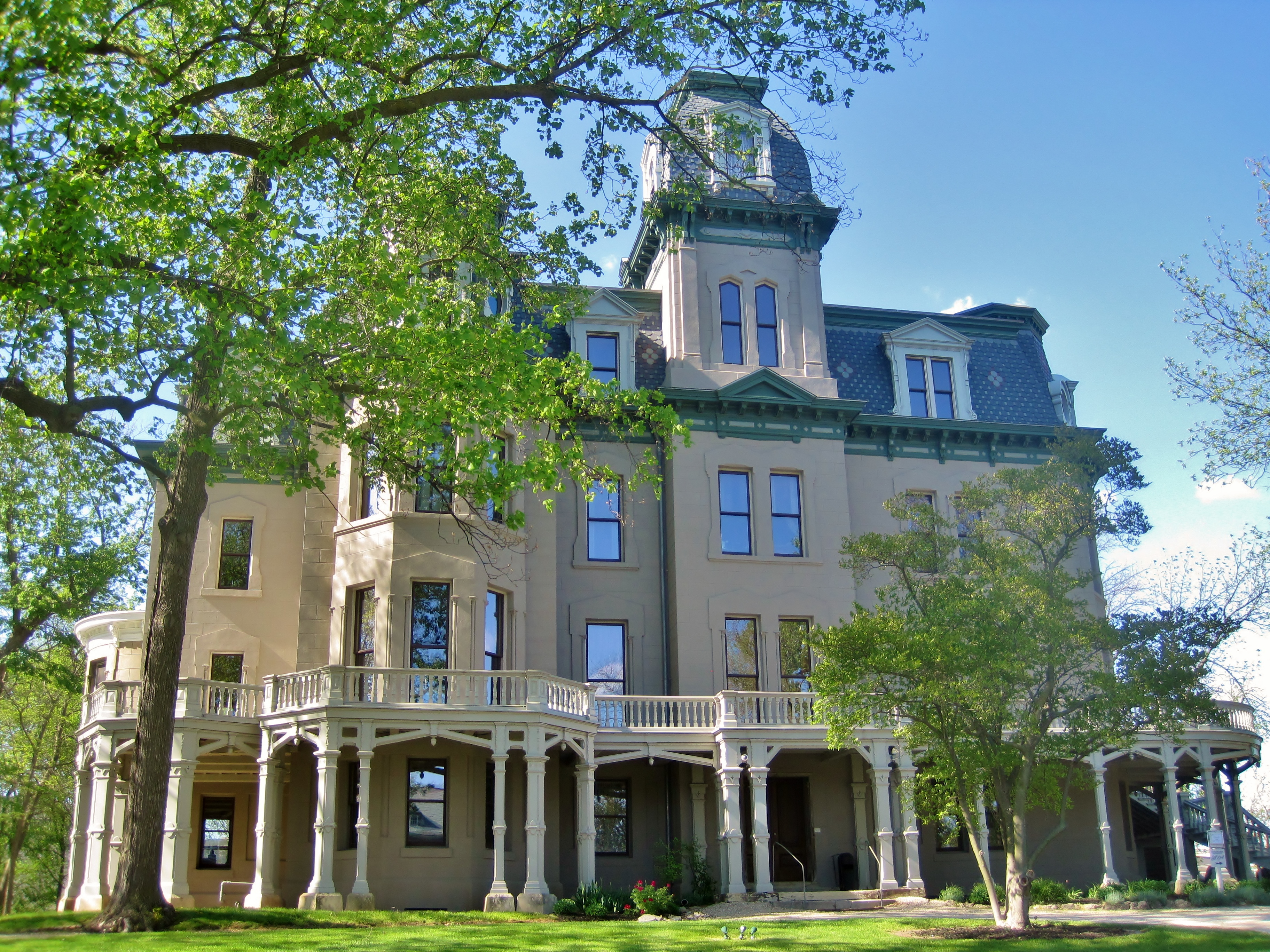
Seven floors. Fifty-seven rooms. Twenty-four thousand square feet. Ten fireplaces. A dining table that seats twenty-two. A hand-painted ceiling and a unique parquet floor in every public room — designed by August Fiedler, executed in 1876. The basement holds the oldest surviving private gymnasium in the United States, built in the German Turnverein tradition. The architect was William W. Boyington, the same man who designed the Chicago Water Tower. Edward Hegeler, the German-born zinc magnate, built it. His daughter Mary became the first woman to earn an engineering degree at the University of Michigan, then ran the Matthiessen-Hegeler Zinc Company as president from 1903. Her husband Paul Carus ran Open Court Publishing from the first floor for thirty-two years and brought D.T. Suzuki — the man who would carry Zen Buddhism to the Western world — to live and work in LaSalle for eleven years. The last Carus to live in the mansion was Alwin, who stayed alone until he was ninety-nine, and would mosey downstairs to chat with tour visitors. He died at one hundred and two. National Historic Landmark, 2007. The original Open Court typesetting equipment is still in the basement.
Civic · Religion
No. 02 · Peru
Big Ben was patented here
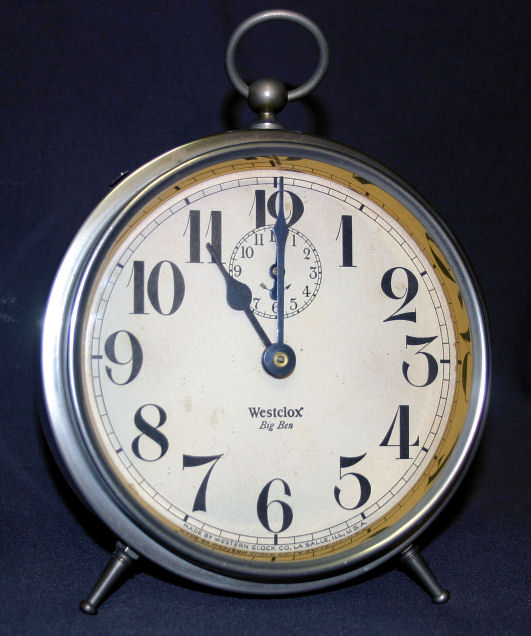
Charles Stahlberg patented the lead-alloy gear-plate idea in 1885 and went bankrupt twice before zinc baron F.W. Matthiessen reorganized his United Clock Company as Western Clock Manufacturing in 1888. The Big Ben alarm clock — patented 1908, the first alarm clock ever advertised nationally — followed in 1909. The Saturday Evening Post ran the first ad in 1910. Baby Ben came that same year. At its peak the plant ran three thousand workers across forty-four buildings, with gardens, tennis courts, and a bowling alley on the campus. During the war the company made one-dollar-and-sixty-five-cent 'Waralarm' clocks with no maker name on them — brass was rationed. R.D. Patton joined Stahlberg's startup in 1886 at age thirteen and was still working at Westclox fifty years later. The luminous dials of the 1920s and 1930s were hand-painted by women using radium paint — the radium-girls connection nobody talks about. Closed 2001. Two teenagers set fire to the complex on New Year's Day, 2012, destroying a quarter of it. The surviving wing is now the Westclox Museum.
Industry
No. 03 · Utica
Six buildings on the I&M Canal
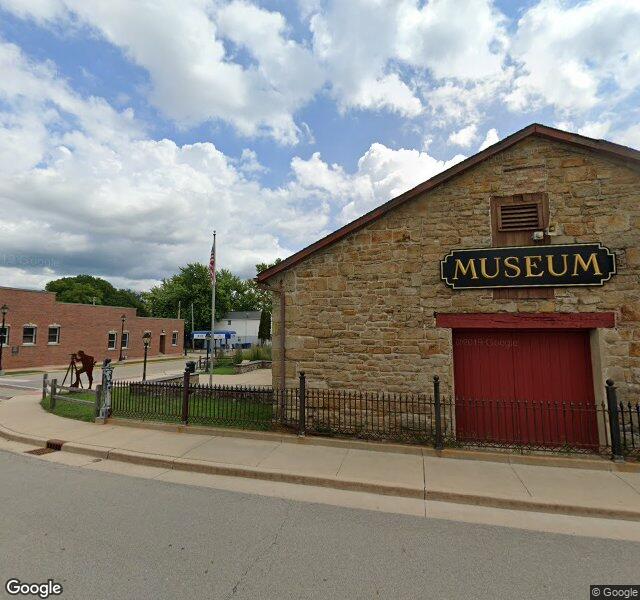
The Canal Warehouse — the centerpiece of this six-building campus on the I&M Canal — was a working transshipment station when LaSalle was the western terminus of the canal that connected the Mississippi to the Great Lakes. Steamboats from New Orleans unloaded molasses, sugar, coffee. Canal boats from Chicago brought lumber, stoves, eastern fashions. Today the campus holds the most important regional archive in the Illinois Valley — including the Native American collection from the Zimmerman Site, just across the river.
Canal · Rail
No. 04 · Ottawa
1860: 'If you want your liberty, come!'
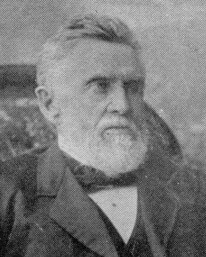
Scottish-born abolitionist John Hossack built this house in 1854 and ran it as an Underground Railroad stop, sheltering up to thirteen fugitives at a time. In 1860 he was on trial for the dramatic in-court rescue of an escaped slave named Jim Gray — when the federal marshal's case was being read, Hossack stood up and yelled 'If you want your liberty, come!' across the courtroom. Gray bolted, abolitionists blocked the marshals, and a waiting carriage took him north. Hossack got ten days and a $100 fine. Gray got Canada.
Underground Railroad
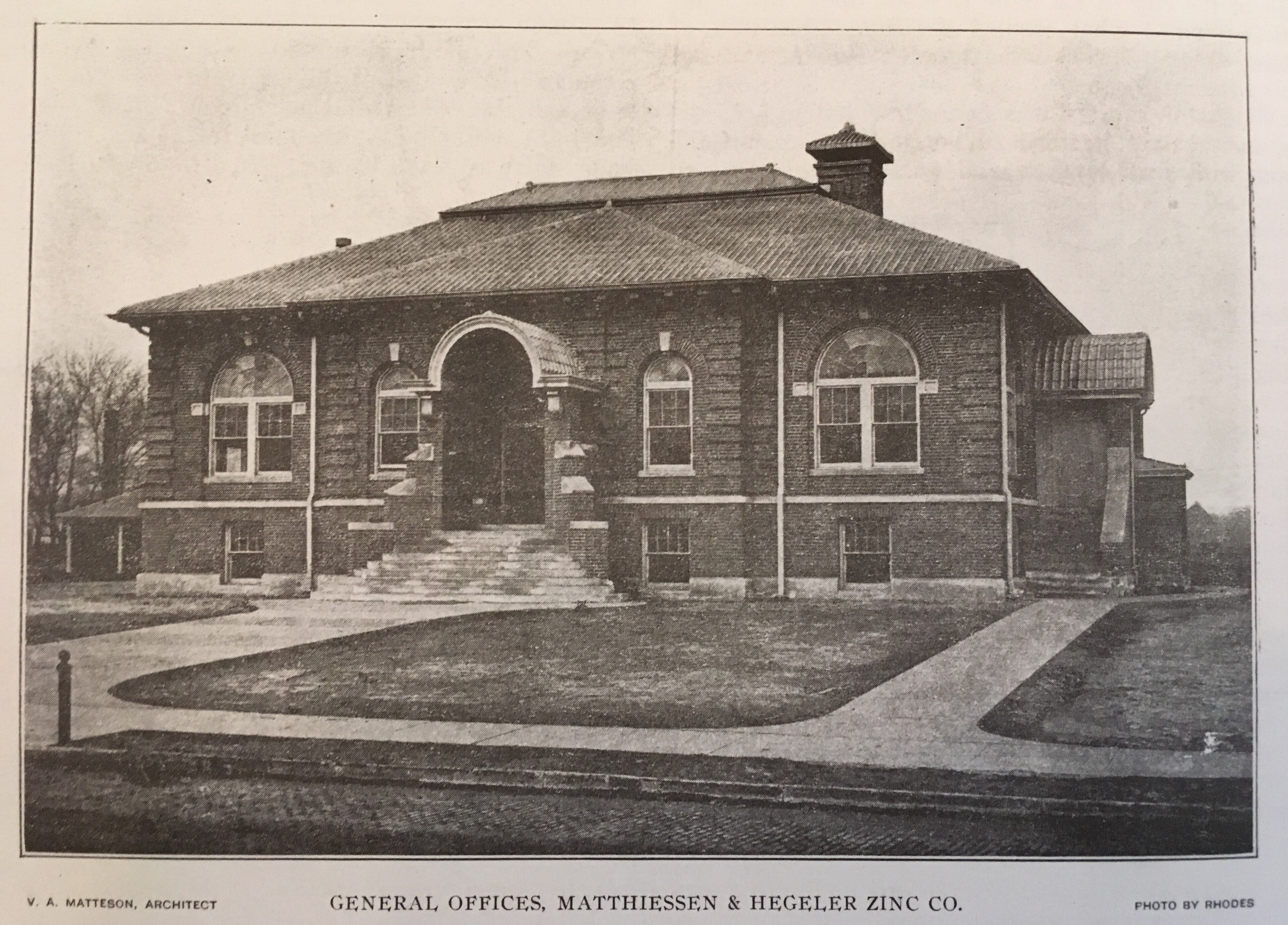
No. 05 · LaSalle
America's largest zinc producer — and the eight-hour workday, in 1885
Two twenty-one-year-old German immigrants — Frederick Matthiessen and Edward Hegeler — opened a zinc smelter on a hundred-and-sixty acres north of the Little Vermilion River in 1858. They had picked LaSalle for its coal (zinc smelting takes two tons of coal per ton of zinc), the canal and the Illinois Central for transport, and Mineral Point in Wisconsin for the ore. Within thirty years it was the largest zinc producer in the United States. Hegeler's muffle roast kiln went into use worldwide. He instituted an eight-hour workday in 1885 — almost a decade ahead of federal law — paid high wages, loaned workers money to buy their houses, and ran a worker council with a real voice. From the 1880s through the 1910s, while strikes rocked American industry, the M&H Zinc Works had not a single one. The first strike came in 1936, eighteen years after Matthiessen's death. Smelting stopped in 1961. Sulfuric-acid production stopped in 1968. The rolling mill ran until 1978. Today the southern portion is an EPA Superfund site — cadmium, lead, arsenic — but the southern boundary still operates: Hegeler's great-grandson and his wife run LaSalle Rolling Mills, supplying zinc cores for U.S. copper pennies, on the same ground.
Industry