← All TownsWalk it in 3D →
Town hub · Illinois Valley3 places on file

Peru, Illinois

Peru, Illinois — Where Big Ben Was Patented

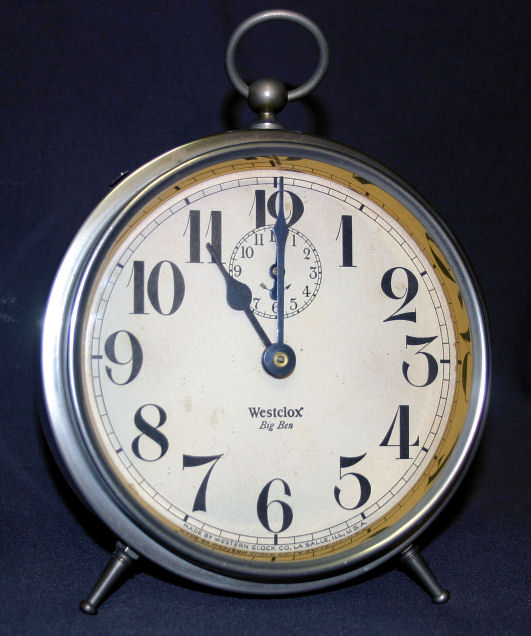
Peru is the clock town. The Westclox factory at 320 Fifth Street patented the Big Ben alarm clock in 1908 and ran three thousand workers across forty-four buildings at its peak — gardens, tennis courts, a bowling alley on the campus.

It is also a Cosgrove town. Tinney Cosgrove ran the South Bluff Country Club on the bluff above Peru and lived on the grounds with his family. His son Mickey ran a service station at the corner of Fourth and Pike before he enlisted in February 1943 and was killed in action at the Battle of Hill 91 in August 1944.

The Big Ben tick and the Sinclair pump's ding-bell were the two sounds of Peru in the 1940s. Both went quiet by the early 2000s.

Places in Peru

3 dispatches
Mickey's Service Station

No. 01 · 1933–1953

Mickey's Service Station

Tinney Cosgrove's son ran the legitimate front

After high school William R. 'Mickey' Cosgrove Jr. ran a service station at the corner of Fourth and Pike in Peru while his father William R. 'Tinney' Cosgrove Sr. ran the Silver Congo on First Street in LaSalle and broke ground on a movie theater called The Peacock. Mickey enlisted on February 23, 1943, landed at Omaha Beach in June 1944 with the 33rd Armored Regiment, was wounded in the Battle of Hill 91 in July, and was killed in action on August 29, 1944 — twenty-two days after returning to duty. His remains came home in 1948. The day Tinney got the telegram, he walked off the Peacock construction site and never came back. Mickey's pump went quiet that summer. The legitimate Cosgrove front died with the son.

Landmark
Westclox Factory

No. 02 · 1850–1900

Westclox Factory

Big Ben was patented here

Charles Stahlberg patented the lead-alloy gear-plate idea in 1885 and went bankrupt twice before zinc baron F.W. Matthiessen reorganized his United Clock Company as Western Clock Manufacturing in 1888. The Big Ben alarm clock — patented 1908, the first alarm clock ever advertised nationally — followed in 1909. The Saturday Evening Post ran the first ad in 1910. Baby Ben came that same year. At its peak the plant ran three thousand workers across forty-four buildings, with gardens, tennis courts, and a bowling alley on the campus. During the war the company made one-dollar-and-sixty-five-cent 'Waralarm' clocks with no maker name on them — brass was rationed. R.D. Patton joined Stahlberg's startup in 1886 at age thirteen and was still working at Westclox fifty years later. The luminous dials of the 1920s and 1930s were hand-painted by women using radium paint — the radium-girls connection nobody talks about. Closed 2001. Two teenagers set fire to the complex on New Year's Day, 2012, destroying a quarter of it. The surviving wing is now the Westclox Museum.

Industry

South Bluff Country Club

No. 03 · 1933–1953

South Bluff Country Club

Tinney Cosgrove's other club — and his family's home

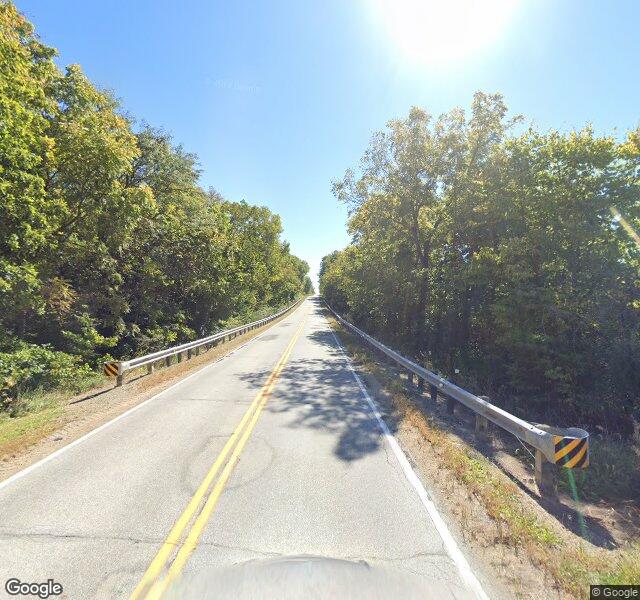
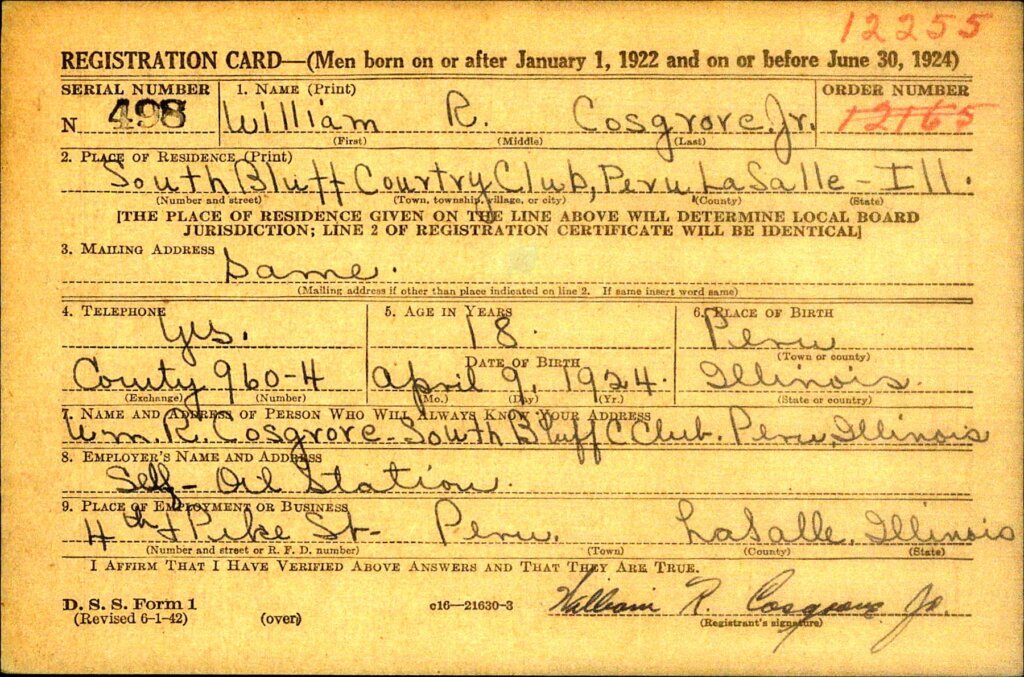
A par-36, 2,851-yard golf course built on the bluff above Peru in 1930. By the late 1930s William R. 'Tinney' Cosgrove Sr. — proprietor of the Silver Congo on First Street — was running the gambling operation here too. The remarkable part: the Cosgrove family lived on the grounds for a stretch in the early 1940s. When Mickey registered for the WWII draft on June 30, 1942, this country club was the address he wrote on the form. The clubhouse doubled as a Sunday brunch spot, a wedding venue, and an after-hours casino. The course is still open today and you can still walk the same bluff Mickey walked the morning he enlisted.

Gambling · Vice

People of Peru

2 names

Nearby

An interactive expedition

Walk Peru in 3D

Enter the world