No. 01 · 1933–1953
The country casino at the heart of Little Reno
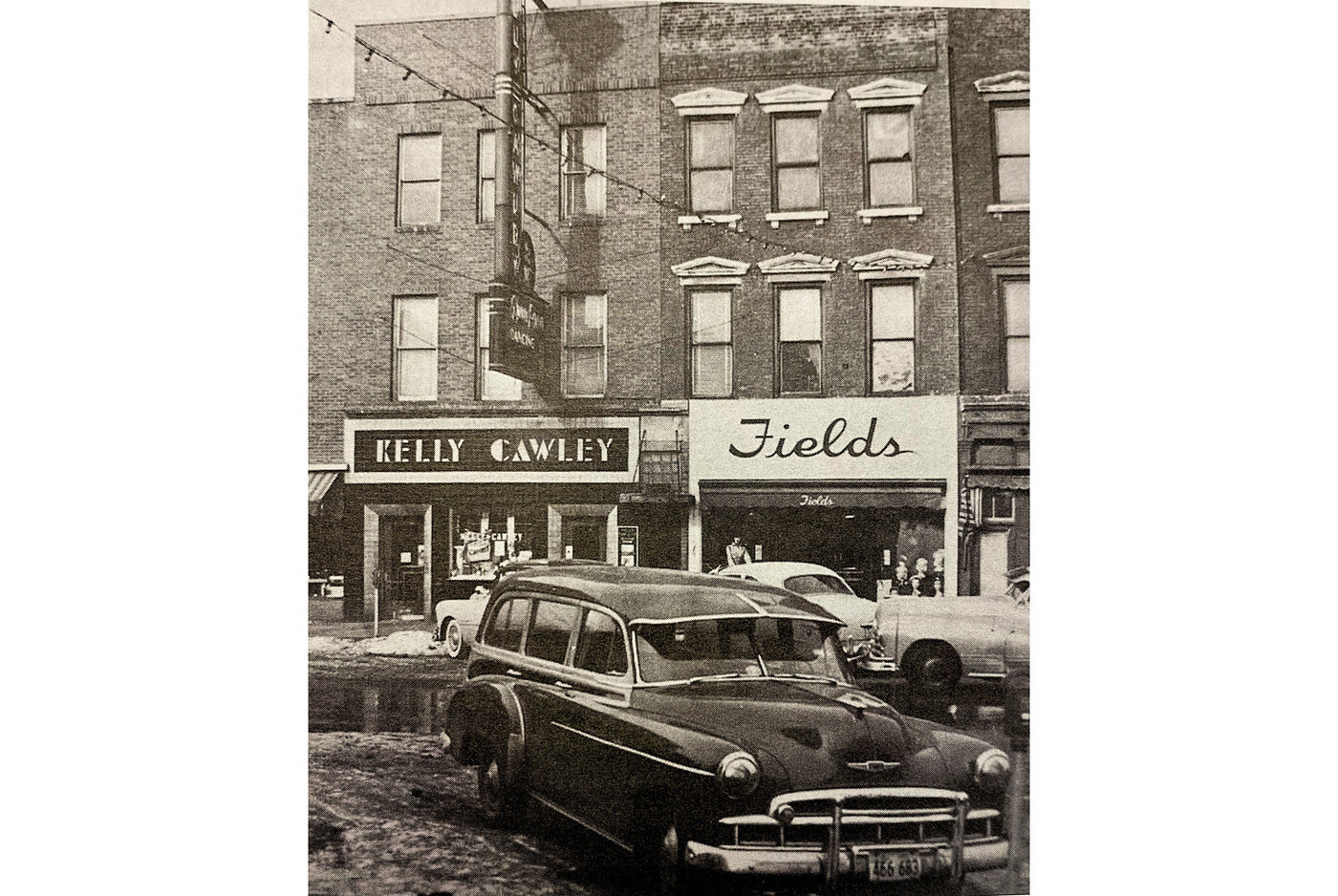
Three-story brick, glazed tan facade, a neon sign that lit the block in every direction. The first floor was the cover — a long bar, dining tables, a baseball pool, slot machines, and a racing-wire that clattered out results live. Up the stairway to the second floor was where the heavy money played: an ornate round counter bar, a huge roulette wheel, fifty more slots, poker rooms, and a bandstand where Donald O'Connor and George Gobel worked the nights. Steak dinners cost fifty cents, chicken twenty-five — Cawley's slot revenue covered the giveaway. He had a quiet policy with ruined housewives: he refunded their husband's losses without argument, on the condition the family never came back. State's Attorney Harland Warren timed his raid for the Saturday afternoon before Washington's Birthday, 1953, so the banks would close and Cawley couldn't post bond. They came down the stairs with two craps tables, the roulette wheel, the bingo barrel, racing forms, and chips. The phone in the cashier cage rang the entire time. Warren picked it up himself, smiled, and told the callers there'd be no bets today.
Gambling · Vice
No. 02 · 1900–1933
Six stories of Marshall & Fox elegance — and rumored Prohibition speakeasy
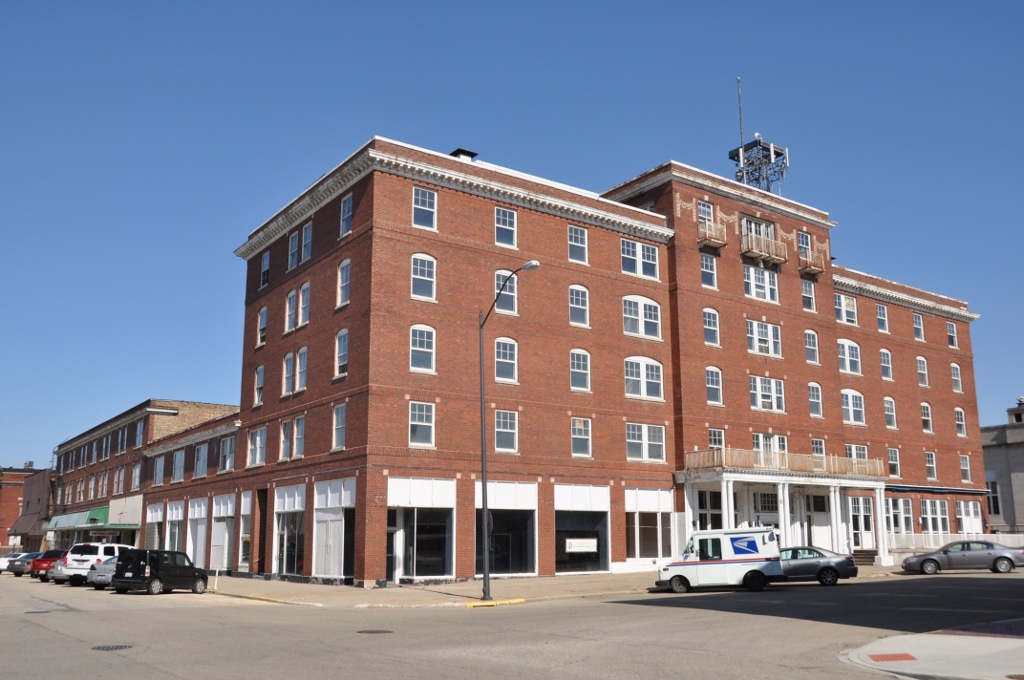
Six stories. One hundred and seven rooms. Colonial Revival red brick. Designed in 1914 by Marshall & Fox of Chicago — the same firm that built the Drake and the Blackstone — for the seven Illinois Valley businessmen who called themselves the Kaskaskia Hotel Group. Governor Edward Dunne was the first guest in September 1915. Amelia Earhart slept here. So did Spike Jones and his City Slickers, the opera star Amelita Galli-Curci, and Pacific Fleet commander Admiral Chester Nimitz. WJBC radio broadcast live from the third floor from 1928 to 1934 before the Depression sent it to Bloomington. The basement reportedly ran a speakeasy through Prohibition. A young woman jumped from a top-floor window in the 1920s; another from the roof in 1948. The elevator still opens its doors to no one. Closed in 2001 after eighty-six years. In 2003, industrialist Blouke Carus — yes, that Carus family — bought it at a sheriff's auction for one dollar to keep it from the wrecking ball.
Landmark
No. 03 · 1850–1900
Where Zen Buddhism arrived in America
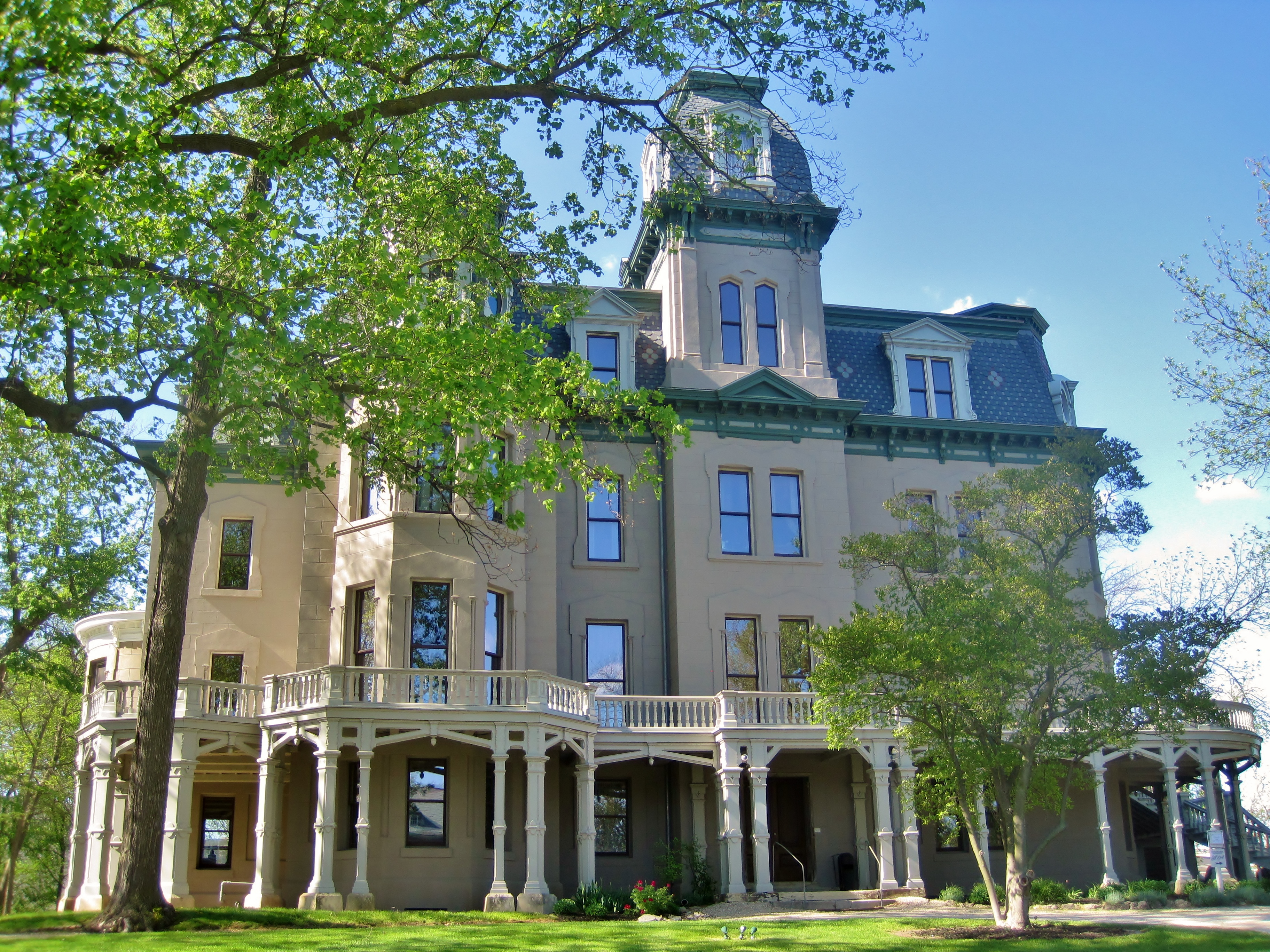
Seven floors. Fifty-seven rooms. Twenty-four thousand square feet. Ten fireplaces. A dining table that seats twenty-two. A hand-painted ceiling and a unique parquet floor in every public room — designed by August Fiedler, executed in 1876. The basement holds the oldest surviving private gymnasium in the United States, built in the German Turnverein tradition. The architect was William W. Boyington, the same man who designed the Chicago Water Tower. Edward Hegeler, the German-born zinc magnate, built it. His daughter Mary became the first woman to earn an engineering degree at the University of Michigan, then ran the Matthiessen-Hegeler Zinc Company as president from 1903. Her husband Paul Carus ran Open Court Publishing from the first floor for thirty-two years and brought D.T. Suzuki — the man who would carry Zen Buddhism to the Western world — to live and work in LaSalle for eleven years. The last Carus to live in the mansion was Alwin, who stayed alone until he was ninety-nine, and would mosey downstairs to chat with tour visitors. He died at one hundred and two. National Historic Landmark, 2007. The original Open Court typesetting equipment is still in the basement.
Civic · Religion
No. 04 · 1850–1900
America's largest zinc producer — and the eight-hour workday, in 1885
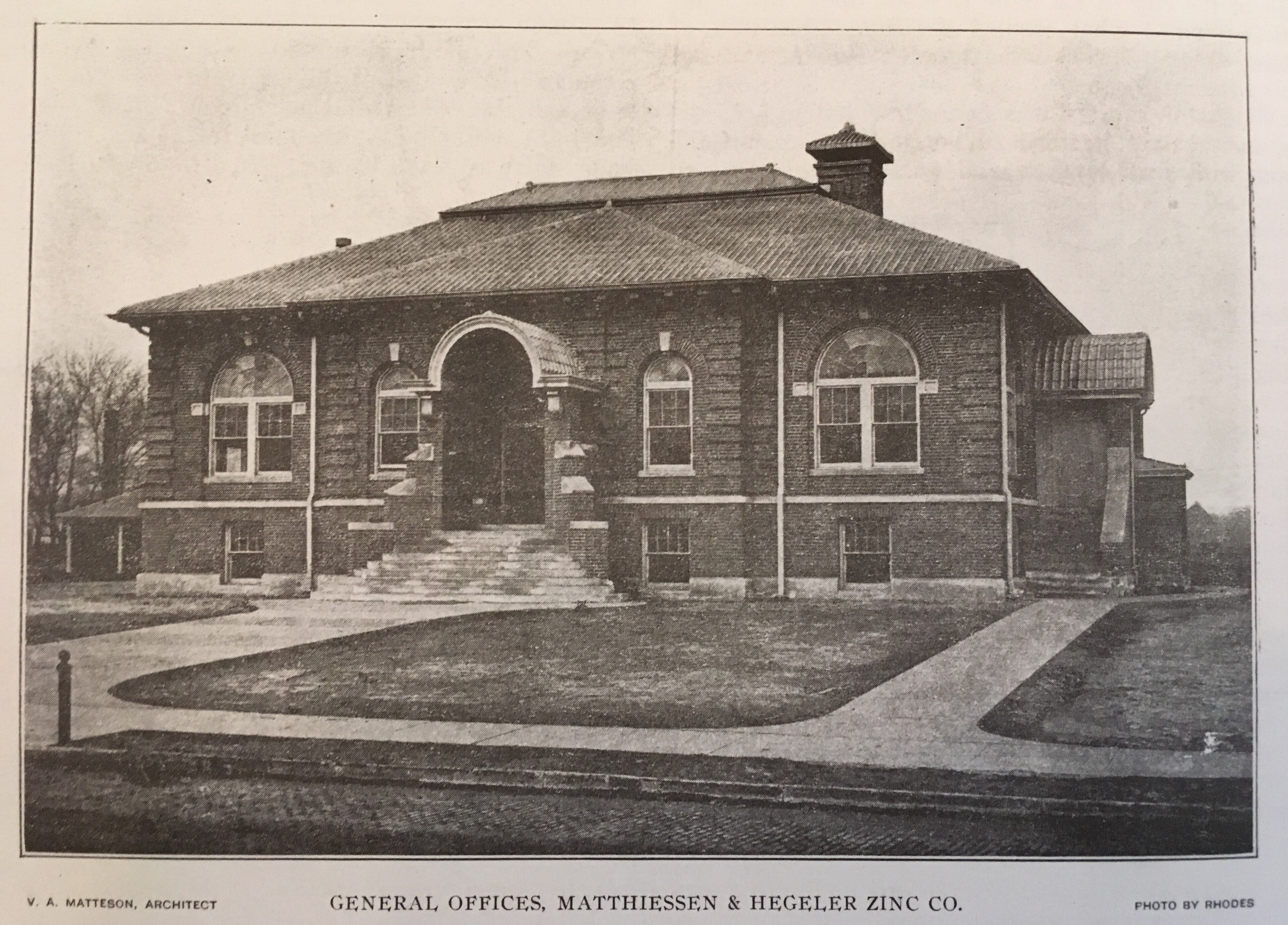
Two twenty-one-year-old German immigrants — Frederick Matthiessen and Edward Hegeler — opened a zinc smelter on a hundred-and-sixty acres north of the Little Vermilion River in 1858. They had picked LaSalle for its coal (zinc smelting takes two tons of coal per ton of zinc), the canal and the Illinois Central for transport, and Mineral Point in Wisconsin for the ore. Within thirty years it was the largest zinc producer in the United States. Hegeler's muffle roast kiln went into use worldwide. He instituted an eight-hour workday in 1885 — almost a decade ahead of federal law — paid high wages, loaned workers money to buy their houses, and ran a worker council with a real voice. From the 1880s through the 1910s, while strikes rocked American industry, the M&H Zinc Works had not a single one. The first strike came in 1936, eighteen years after Matthiessen's death. Smelting stopped in 1961. Sulfuric-acid production stopped in 1968. The rolling mill ran until 1978. Today the southern portion is an EPA Superfund site — cadmium, lead, arsenic — but the southern boundary still operates: Hegeler's great-grandson and his wife run LaSalle Rolling Mills, supplying zinc cores for U.S. copper pennies, on the same ground.
Industry
No. 05 · 1900–1933
A Carnegie library, opened January 19, 1907
Built in 1907 with a twenty-five-thousand-dollar grant from Andrew Carnegie and a thirty-five-thousand-dollar municipal bond. The lot at the northwest corner of Third and Marquette had been bought in 1905 for $4,260. When the doors opened on January 19, 1907, the library held three thousand three hundred and sixty-four volumes. The children of the Hegeler-Carus family probably learned to read here. Open Court Publishing donated stacks of books. Today the library holds about sixty-five thousand volumes, expanded a youth services and meeting wing in 2003, and is one of only eighty-three Carnegie libraries still operating in Illinois — a small, perfect piece of the LaSalle that the gambling tourists never saw.
Civic · Religion