Section A · The Field Guide
All Places
Every site in the Illinois Valley with a story worth telling, from the speakeasies of First Street to the Cherry Mine memorial.
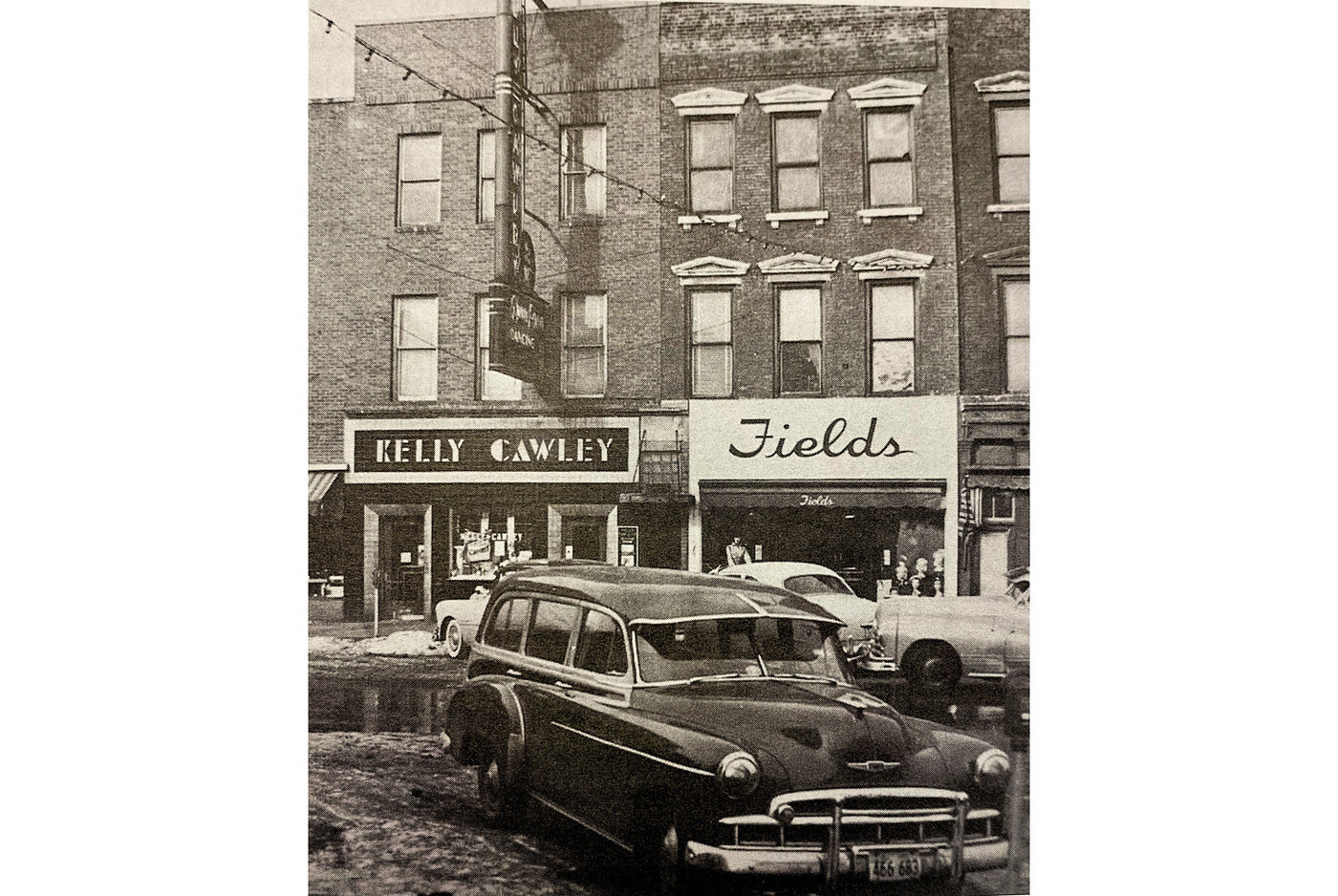
No. 01 · LaSalle · 1933–1953
The country casino at the heart of Little Reno
Three-story brick, glazed tan facade, a neon sign that lit the block in every direction. The first floor was the cover — a long bar, dining tables, a baseball pool, slot machines, and a racing-wire that clattered out results live. Up the stairway to the second floor was where the heavy money played: an ornate round counter bar, a huge roulette wheel, fifty more slots, poker rooms, and a bandstand where Donald O'Connor and George Gobel worked the nights. Steak dinners cost fifty cents, chicken twenty-five — Cawley's slot revenue covered the giveaway. He had a quiet policy with ruined housewives: he refunded their husband's losses without argument, on the condition the family never came back. State's Attorney Harland Warren timed his raid for the Saturday afternoon before Washington's Birthday, 1953, so the banks would close and Cawley couldn't post bond. They came down the stairs with two craps tables, the roulette wheel, the bingo barrel, racing forms, and chips. The phone in the cashier cage rang the entire time. Warren picked it up himself, smiled, and told the callers there'd be no bets today.
Read full →Filed under: Gambling · Vice
No. 02 · Peru · 1933–1953
Tinney Cosgrove's son ran the legitimate front
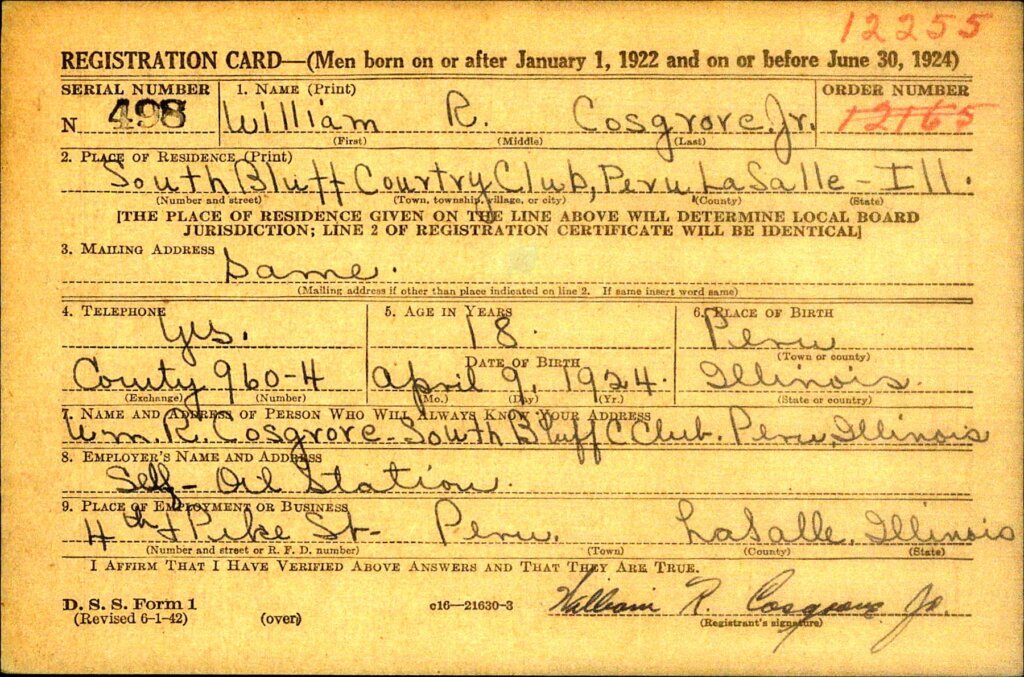
After high school William R. 'Mickey' Cosgrove Jr. ran a service station at the corner of Fourth and Pike in Peru while his father William R. 'Tinney' Cosgrove Sr. ran the Silver Congo on First Street in LaSalle and broke ground on a movie theater called The Peacock. Mickey enlisted on February 23, 1943, landed at Omaha Beach in June 1944 with the 33rd Armored Regiment, was wounded in the Battle of Hill 91 in July, and was killed in action on August 29, 1944 — twenty-two days after returning to duty. His remains came home in 1948. The day Tinney got the telegram, he walked off the Peacock construction site and never came back. Mickey's pump went quiet that summer. The legitimate Cosgrove front died with the son.
Read full →Filed under: Landmark
No. 03 · LaSalle · 1900–1933
Six stories of Marshall & Fox elegance — and rumored Prohibition speakeasy
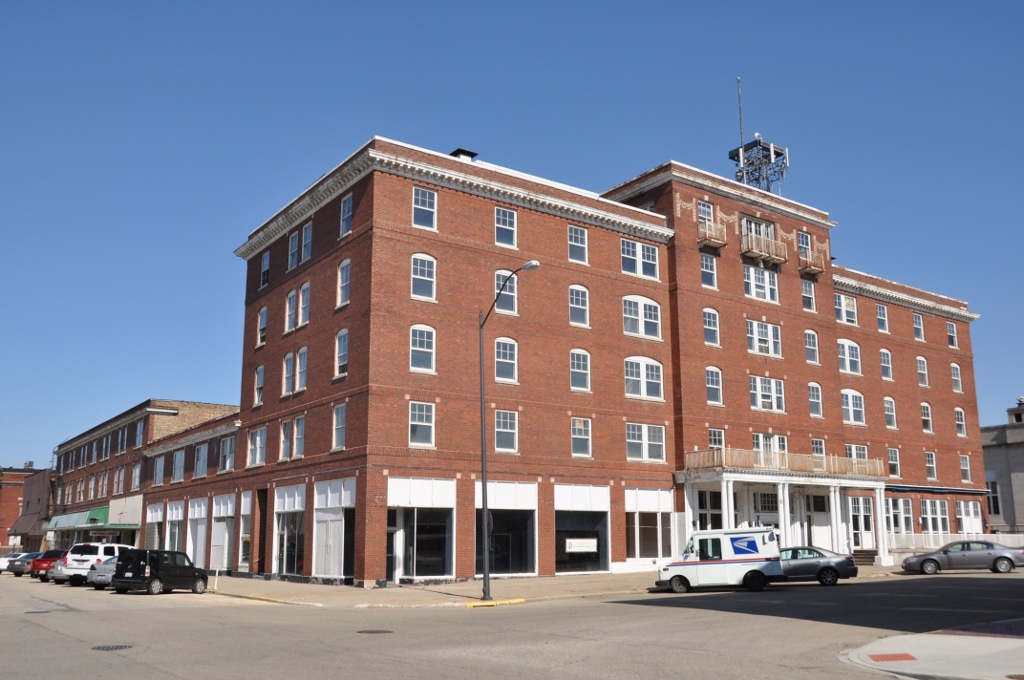
Six stories. One hundred and seven rooms. Colonial Revival red brick. Designed in 1914 by Marshall & Fox of Chicago — the same firm that built the Drake and the Blackstone — for the seven Illinois Valley businessmen who called themselves the Kaskaskia Hotel Group. Governor Edward Dunne was the first guest in September 1915. Amelia Earhart slept here. So did Spike Jones and his City Slickers, the opera star Amelita Galli-Curci, and Pacific Fleet commander Admiral Chester Nimitz. WJBC radio broadcast live from the third floor from 1928 to 1934 before the Depression sent it to Bloomington. The basement reportedly ran a speakeasy through Prohibition. A young woman jumped from a top-floor window in the 1920s; another from the roof in 1948. The elevator still opens its doors to no one. Closed in 2001 after eighty-six years. In 2003, industrialist Blouke Carus — yes, that Carus family — bought it at a sheriff's auction for one dollar to keep it from the wrecking ball.
Read full →Filed under: Landmark
No. 04 · LaSalle · 1850–1900
Where Zen Buddhism arrived in America
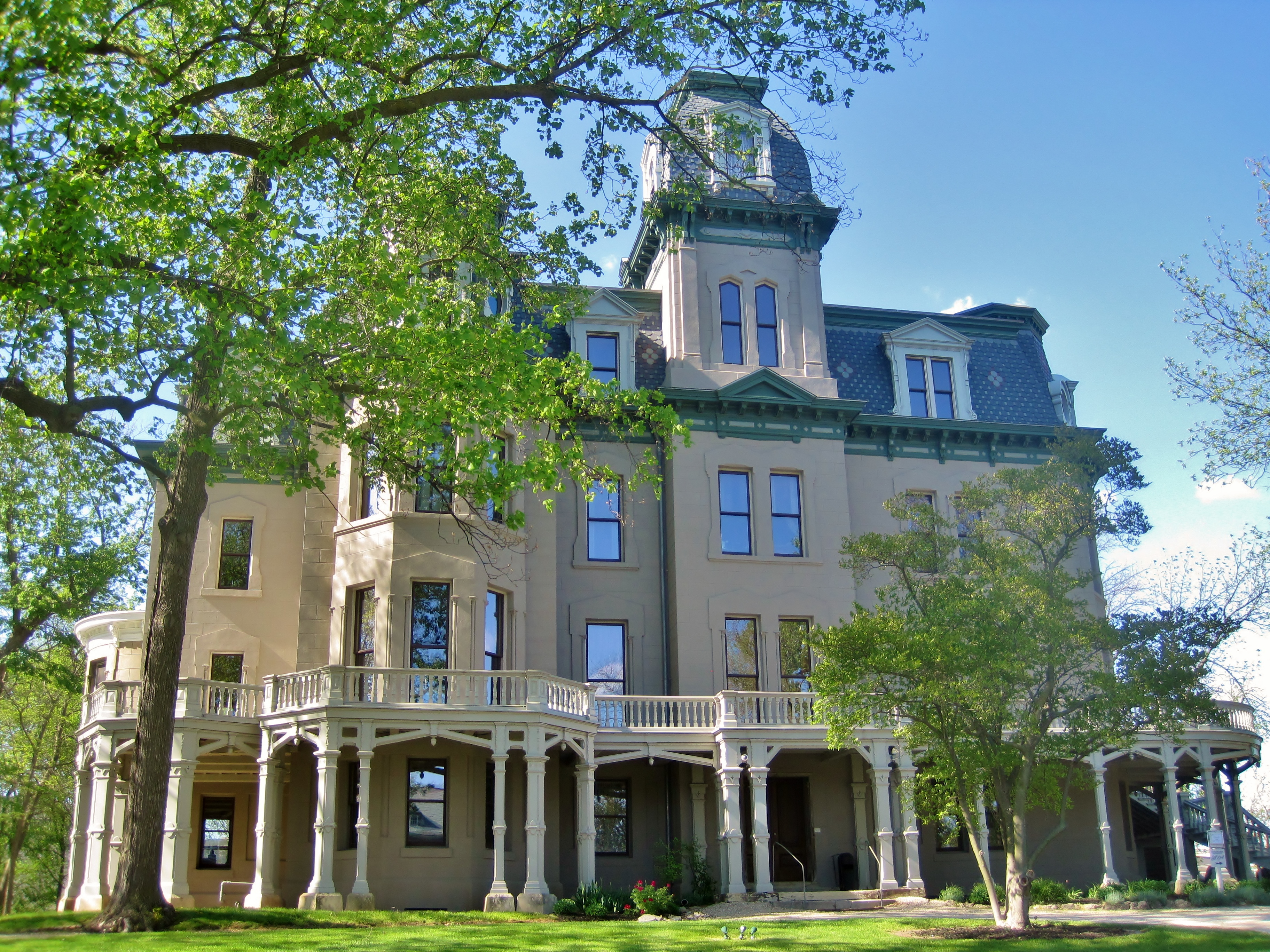
Seven floors. Fifty-seven rooms. Twenty-four thousand square feet. Ten fireplaces. A dining table that seats twenty-two. A hand-painted ceiling and a unique parquet floor in every public room — designed by August Fiedler, executed in 1876. The basement holds the oldest surviving private gymnasium in the United States, built in the German Turnverein tradition. The architect was William W. Boyington, the same man who designed the Chicago Water Tower. Edward Hegeler, the German-born zinc magnate, built it. His daughter Mary became the first woman to earn an engineering degree at the University of Michigan, then ran the Matthiessen-Hegeler Zinc Company as president from 1903. Her husband Paul Carus ran Open Court Publishing from the first floor for thirty-two years and brought D.T. Suzuki — the man who would carry Zen Buddhism to the Western world — to live and work in LaSalle for eleven years. The last Carus to live in the mansion was Alwin, who stayed alone until he was ninety-nine, and would mosey downstairs to chat with tour visitors. He died at one hundred and two. National Historic Landmark, 2007. The original Open Court typesetting equipment is still in the basement.
Read full →Filed under: Civic · Religion
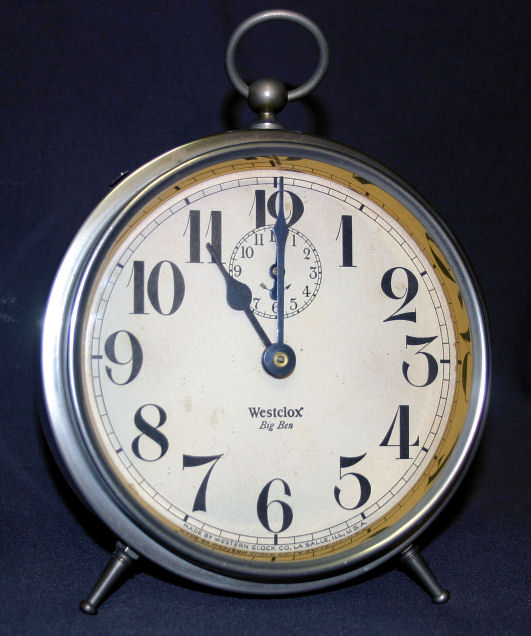
No. 05 · Peru · 1850–1900
Big Ben was patented here
Charles Stahlberg patented the lead-alloy gear-plate idea in 1885 and went bankrupt twice before zinc baron F.W. Matthiessen reorganized his United Clock Company as Western Clock Manufacturing in 1888. The Big Ben alarm clock — patented 1908, the first alarm clock ever advertised nationally — followed in 1909. The Saturday Evening Post ran the first ad in 1910. Baby Ben came that same year. At its peak the plant ran three thousand workers across forty-four buildings, with gardens, tennis courts, and a bowling alley on the campus. During the war the company made one-dollar-and-sixty-five-cent 'Waralarm' clocks with no maker name on them — brass was rationed. R.D. Patton joined Stahlberg's startup in 1886 at age thirteen and was still working at Westclox fifty years later. The luminous dials of the 1920s and 1930s were hand-painted by women using radium paint — the radium-girls connection nobody talks about. Closed 2001. Two teenagers set fire to the complex on New Year's Day, 2012, destroying a quarter of it. The surviving wing is now the Westclox Museum.
Read full →Filed under: Industry
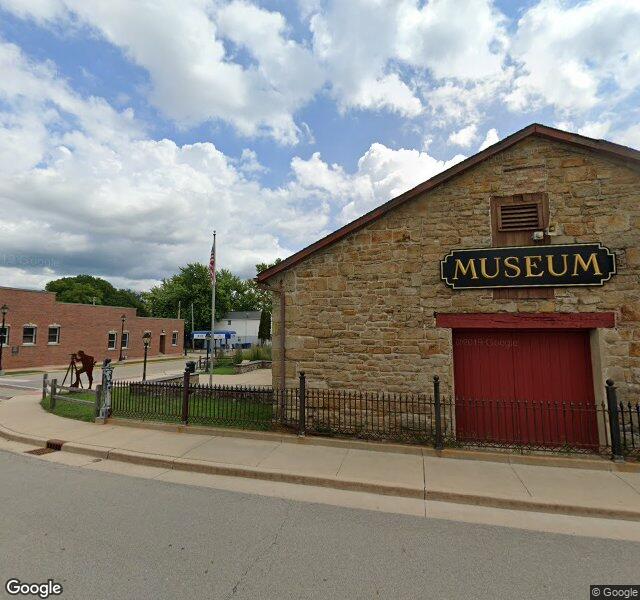
No. 06 · Utica · 1850–1900
Six buildings on the I&M Canal
The Canal Warehouse — the centerpiece of this six-building campus on the I&M Canal — was a working transshipment station when LaSalle was the western terminus of the canal that connected the Mississippi to the Great Lakes. Steamboats from New Orleans unloaded molasses, sugar, coffee. Canal boats from Chicago brought lumber, stoves, eastern fashions. Today the campus holds the most important regional archive in the Illinois Valley — including the Native American collection from the Zimmerman Site, just across the river.
Read full →Filed under: Canal · Rail
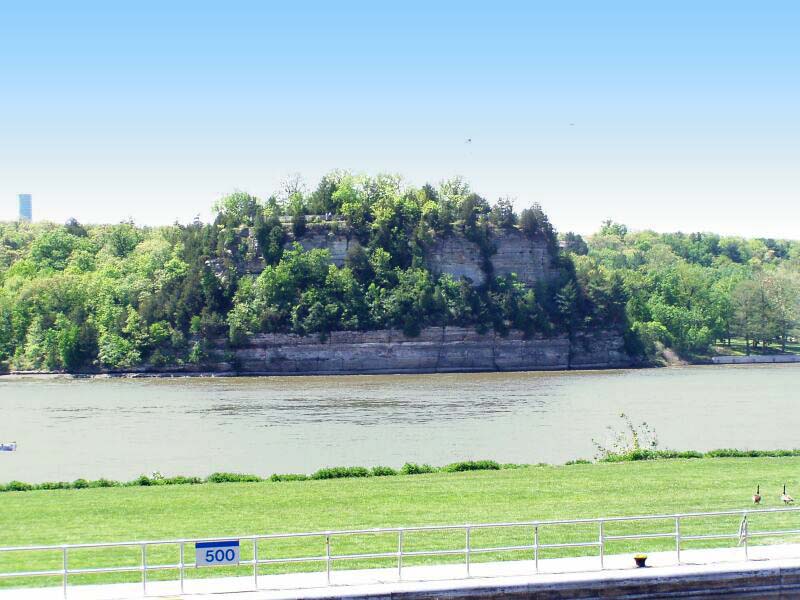
No. 07 · Utica · Pre-1700
Fort St. Louis, 1682. The siege legend, 1769.
A 125-foot sandstone bluff carved out by Wisconsonian glacial meltwater fifteen thousand years ago. Louis Jolliet and Father Jacques Marquette were the first Europeans to see it in 1673. In the winter of 1683, Henri Tonti finished Fort St. Louis on top — a French anchor for the fur trade with the Illinois Confederation, ordered by his commander René-Robert Cavelier, sieur de La Salle. By 1720 the fort was gone. The legend that gave the rock its name dates from around 1769: after Ottawa Chief Pontiac was assassinated by an Illinois warrior in Cahokia, the Ottawa and their Potawatomi allies cornered a band of Illinois on top of the rock and besieged them until they starved. Eleven escaped during a thunderstorm, climbing down to canoes their enemies had left at the river. Daniel Hitt bought the parcel from the federal government in 1835 for eighty-five dollars as compensation for his Army service. He sold it in 1890 to Ferdinand Walther for fifteen thousand. Walther built the original lodge, a natural pool, and a dance hall. Illinois bought it in 1911 as the state's second state park. The Civilian Conservation Corps built the current lodge and trails in the 1930s. Two million visitors a year now.
Read full →Filed under: Native · Frontier
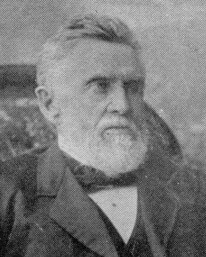
No. 08 · Ottawa · 1850–1900
1860: 'If you want your liberty, come!'
Scottish-born abolitionist John Hossack built this house in 1854 and ran it as an Underground Railroad stop, sheltering up to thirteen fugitives at a time. In 1860 he was on trial for the dramatic in-court rescue of an escaped slave named Jim Gray — when the federal marshal's case was being read, Hossack stood up and yelled 'If you want your liberty, come!' across the courtroom. Gray bolted, abolitionists blocked the marshals, and a waiting carriage took him north. Hossack got ten days and a $100 fine. Gray got Canada.
Read full →Filed under: Underground Railroad
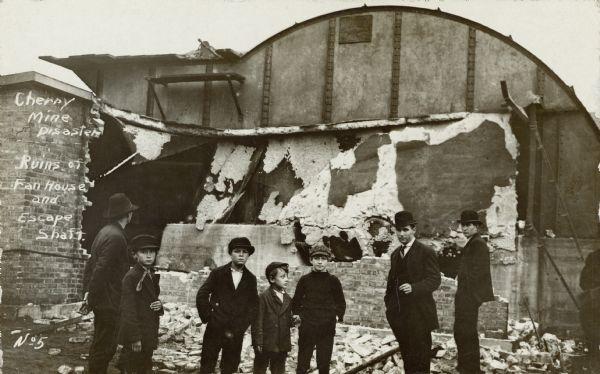
No. 09 · Cherry · 1900–1933
November 13, 1909. 259 dead in eight minutes.
A hay cart caught fire from a kerosene lamp. The flame reached the wooden support timbers. Two hundred and fifty-nine men and boys — many of them Italian and Eastern European immigrants — died in the worst coal mine disaster in Illinois history and the third-deadliest in American history. The bodies were brought ten miles south to LaSalle for processing. Eight days after the fire, twenty miners walked out alive. The disaster directly produced Illinois's 1910 Mine Safety Laws and the 1911 Workmen's Compensation Act — two of the foundational pieces of American labor law, both written because of what happened in Cherry, Illinois. When Tom Cawley was running First Street thirty years later, the men in his bar at midnight were old enough to remember which neighbors had not come home.
Read full →Filed under: Disaster · Labor
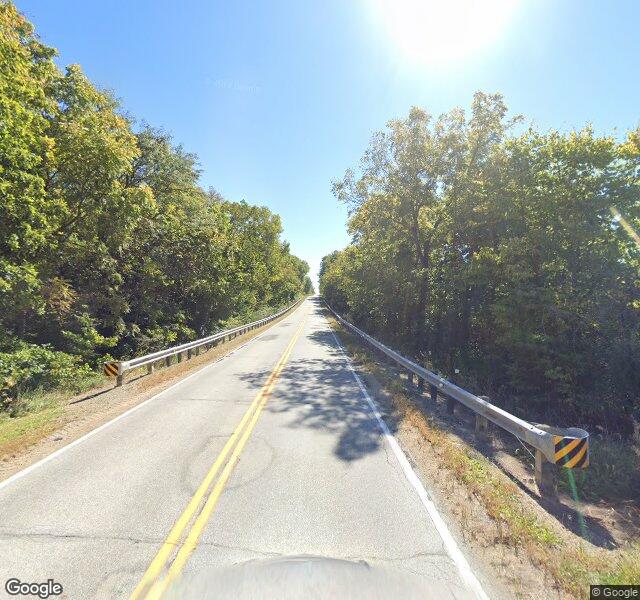
No. 10 · Peru · 1933–1953
Tinney Cosgrove's other club — and his family's home
A par-36, 2,851-yard golf course built on the bluff above Peru in 1930. By the late 1930s William R. 'Tinney' Cosgrove Sr. — proprietor of the Silver Congo on First Street — was running the gambling operation here too. The remarkable part: the Cosgrove family lived on the grounds for a stretch in the early 1940s. When Mickey registered for the WWII draft on June 30, 1942, this country club was the address he wrote on the form. The clubhouse doubled as a Sunday brunch spot, a wedding venue, and an after-hours casino. The course is still open today and you can still walk the same bluff Mickey walked the morning he enlisted.
Read full →Filed under: Gambling · Vice
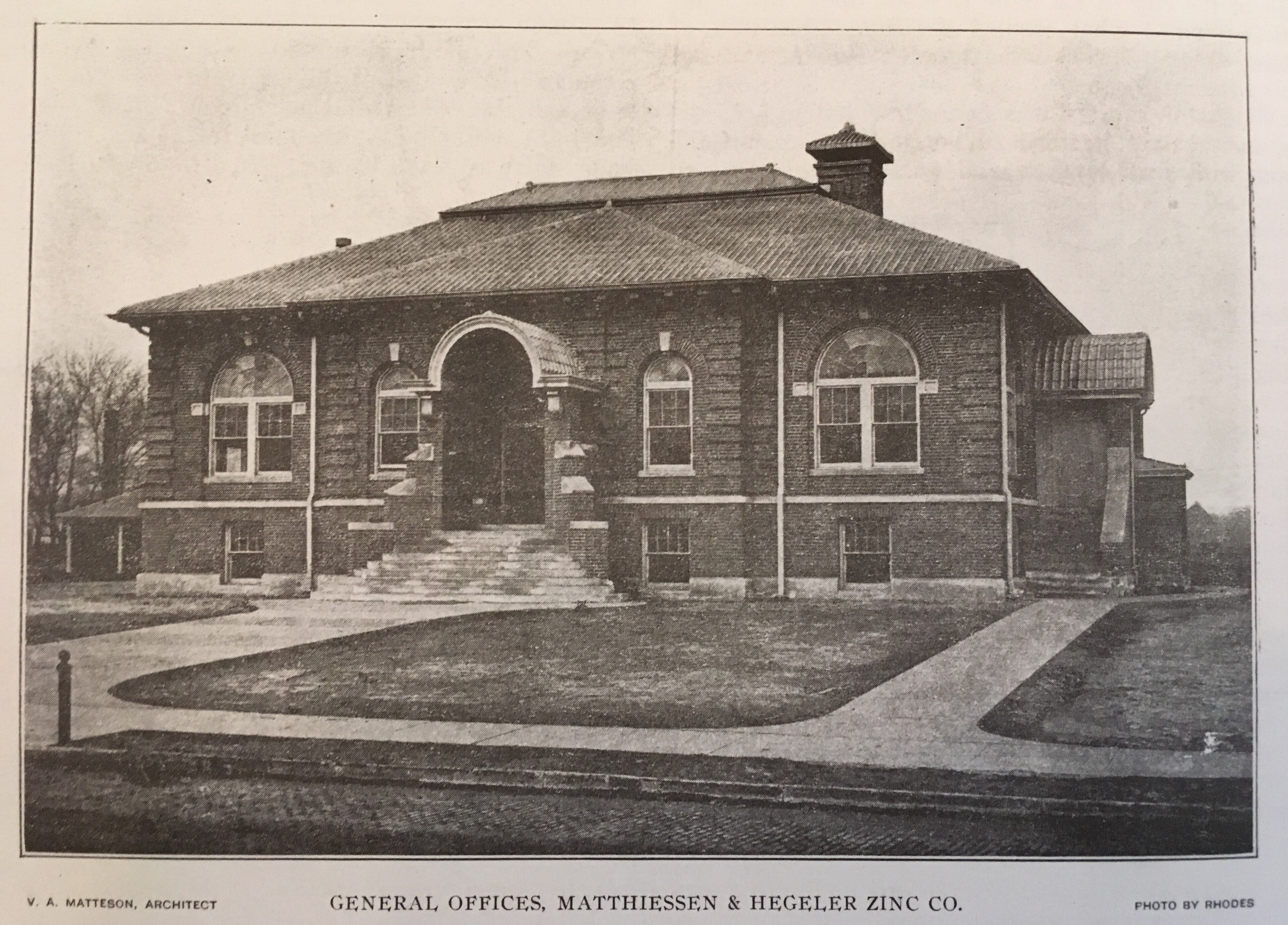
No. 11 · LaSalle · 1850–1900
America's largest zinc producer — and the eight-hour workday, in 1885
Two twenty-one-year-old German immigrants — Frederick Matthiessen and Edward Hegeler — opened a zinc smelter on a hundred-and-sixty acres north of the Little Vermilion River in 1858. They had picked LaSalle for its coal (zinc smelting takes two tons of coal per ton of zinc), the canal and the Illinois Central for transport, and Mineral Point in Wisconsin for the ore. Within thirty years it was the largest zinc producer in the United States. Hegeler's muffle roast kiln went into use worldwide. He instituted an eight-hour workday in 1885 — almost a decade ahead of federal law — paid high wages, loaned workers money to buy their houses, and ran a worker council with a real voice. From the 1880s through the 1910s, while strikes rocked American industry, the M&H Zinc Works had not a single one. The first strike came in 1936, eighteen years after Matthiessen's death. Smelting stopped in 1961. Sulfuric-acid production stopped in 1968. The rolling mill ran until 1978. Today the southern portion is an EPA Superfund site — cadmium, lead, arsenic — but the southern boundary still operates: Hegeler's great-grandson and his wife run LaSalle Rolling Mills, supplying zinc cores for U.S. copper pennies, on the same ground.
Read full →Filed under: Industry
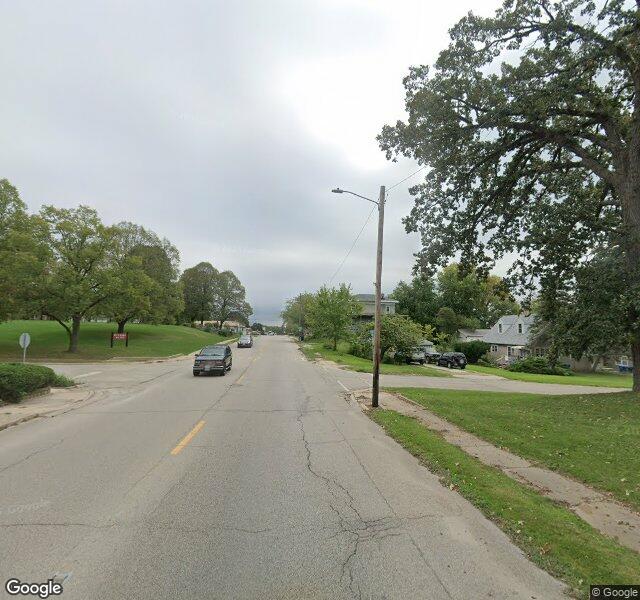
No. 12 · LaSalle · 1900–1933
A Carnegie library, opened January 19, 1907
Built in 1907 with a twenty-five-thousand-dollar grant from Andrew Carnegie and a thirty-five-thousand-dollar municipal bond. The lot at the northwest corner of Third and Marquette had been bought in 1905 for $4,260. When the doors opened on January 19, 1907, the library held three thousand three hundred and sixty-four volumes. The children of the Hegeler-Carus family probably learned to read here. Open Court Publishing donated stacks of books. Today the library holds about sixty-five thousand volumes, expanded a youth services and meeting wing in 2003, and is one of only eighty-three Carnegie libraries still operating in Illinois — a small, perfect piece of the LaSalle that the gambling tourists never saw.
Read full →Filed under: Civic · Religion
An interactive expedition
Or walk it in 3D
A photoreal flyover of every place in this field guide, with narrated dossiers and thirty hidden tokens to discover.
Enter the world→